
Forward-Firing Radar in Traffic Management: Why Radar Orientation Matters
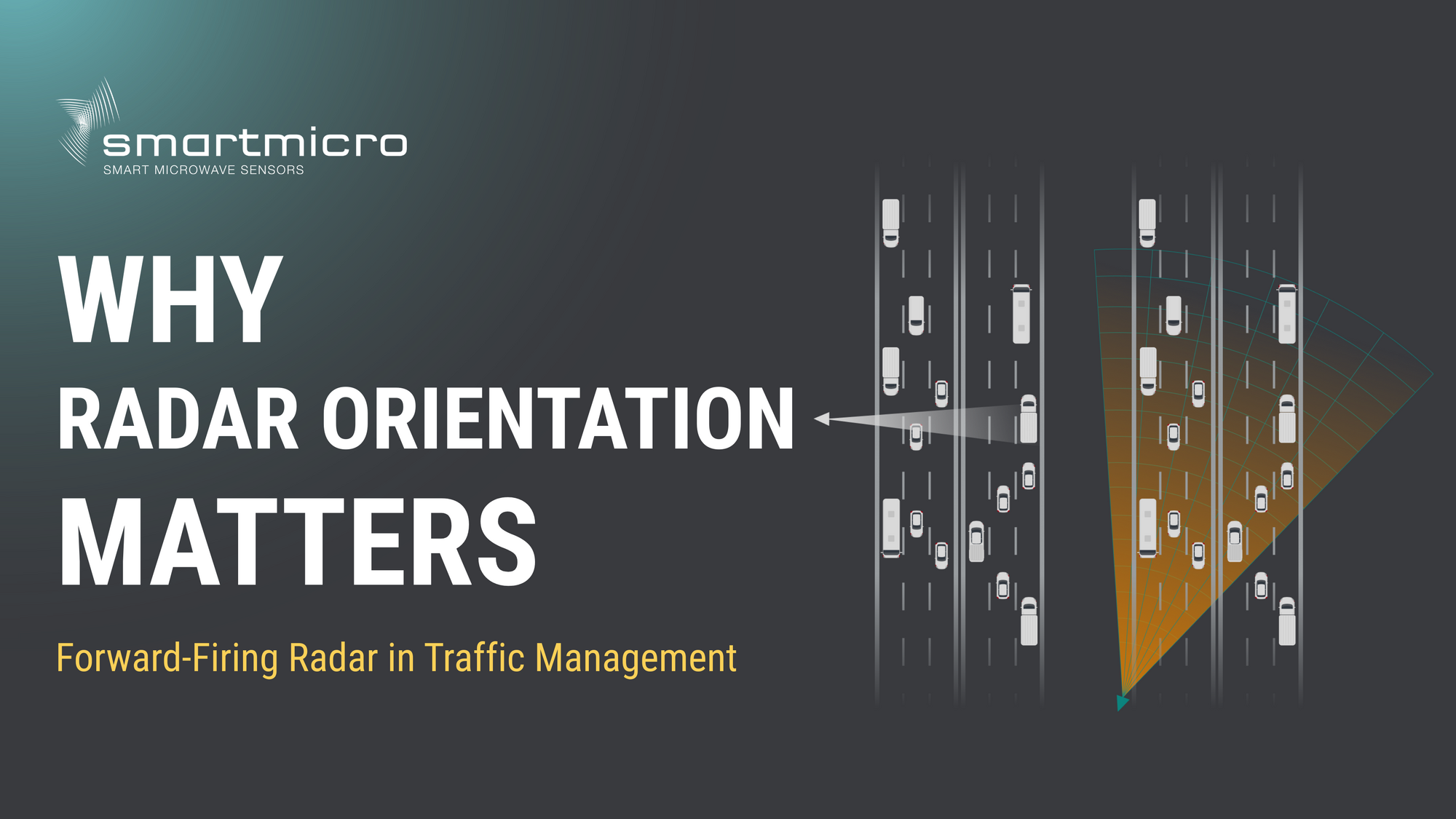
Sensor orientation is a key factor in radar performance and data quality for traffic management. Modern systems increasingly rely on forward-firing radar to achieve optimal results.
What Is Forward-Firing Radar?
Unlike traditional side-firing sensors, which monitor across lanes, forward-firing radar observes traffic along the direction of travel. smartmicro sensors utilize multiple forward-firing beams to enable continuous, high-precision tracking of vehicles throughout the detection zone.
This orientation offers significant advantages:
- Extended vehicle presence within the radar field of view
- Higher accuracy in position and speed vector measurement
- Enhanced vehicle classification capabilities
- Precise trajectory tracking over extended distances
With coverage of up to 300 meters and a field of view over 100 degrees, forward-firing radar enables detailed, lane-specific monitoring for both intersections and highways.
Flexible Installation Options
Forward-firing orientation increases installation flexibility. Sensors can be mounted on:
- On roadside poles
- At intersection corners
- In highway medians
- On gantries
Existing infrastructure, including traffic light and street light poles, can be utilized for installation. Unlike side-firing systems that require high mounting positions, forward-firing radar delivers reliable performance at moderate heights.
Reduced Occlusion
Tracking vehicles over longer distances within the field of view reduces the risk of occlusion. This ensures stable tracking and consistent data quality.
A Foundation for Modern Traffic Detection
Forward-firing radar enables accurate, long-range, and lane-specific traffic monitoring. Extended coverage and precise trajectory tracking meet the demands of advanced traffic management systems.
For integration of radar solutions into your traffic management system, contact our team for detailed information.