Improving Traffic Flow on Smart Corridors in Blackpool
Blackpool is one of the United Kingdom’s most recognisable seaside destinations. While around 141,000 people call the town home, millions of additional visitors arrive each year to experience its beaches, attractions, events, and famous Promenade.
This creates traffic conditions that are anything but predictable. Demand can change significantly between an ordinary weekday, the summer holiday season, and major events attracting large numbers of visitors. At the same time, important routes must continue to provide reliable access to the town centre, visitor attractions, residential areas, Blackpool Victoria Hospital, and the wider regional road network.
To respond more effectively to these changing conditions, Blackpool Council launched its Smart Traffic Corridors project. The objective was to create a more detailed, real-time understanding of traffic across five strategic routes and use that information to improve the way existing traffic signal plans are selected.
The Challenge
Traffic signals along Blackpool’s key corridors have traditionally operated using semi-adaptive fixed-time Urban Traffic Control plans. These plans provide a proven basis for managing the network, but they cannot independently account for every variation in current traffic demand.
This limitation becomes particularly visible in a town such as Blackpool. Seasonal visitor peaks, major entertainment and sporting events, weather conditions, and daily commuter traffic can each create very different patterns on the same routes.
Several existing traffic counters had also become obsolete. Blackpool Council therefore needed a modern detection solution that could replace this ageing infrastructure and provide more than basic vehicle counts.
The new system needed to collect detailed traffic data continuously, cover multiple strategic corridors, and integrate with the Council’s existing traffic management environment. Crucially, the project was not intended to replace the established UTC infrastructure. Instead, the aim was to make better use of it by selecting fixed-time plans based on current network conditions rather than relying primarily on predefined schedules.
The Solution
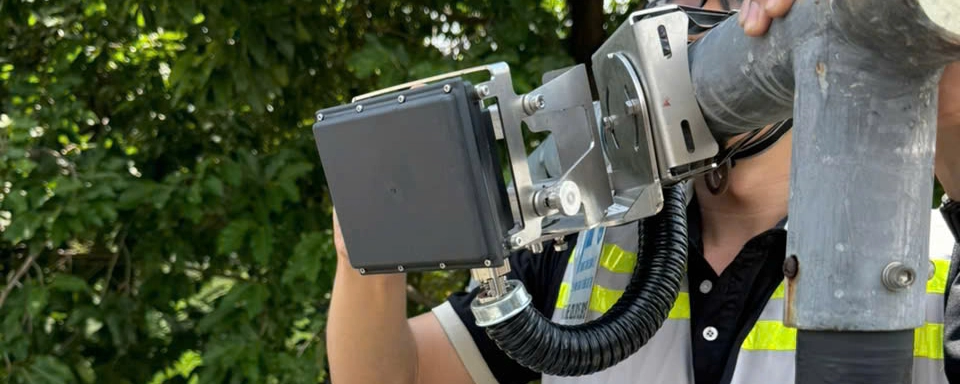
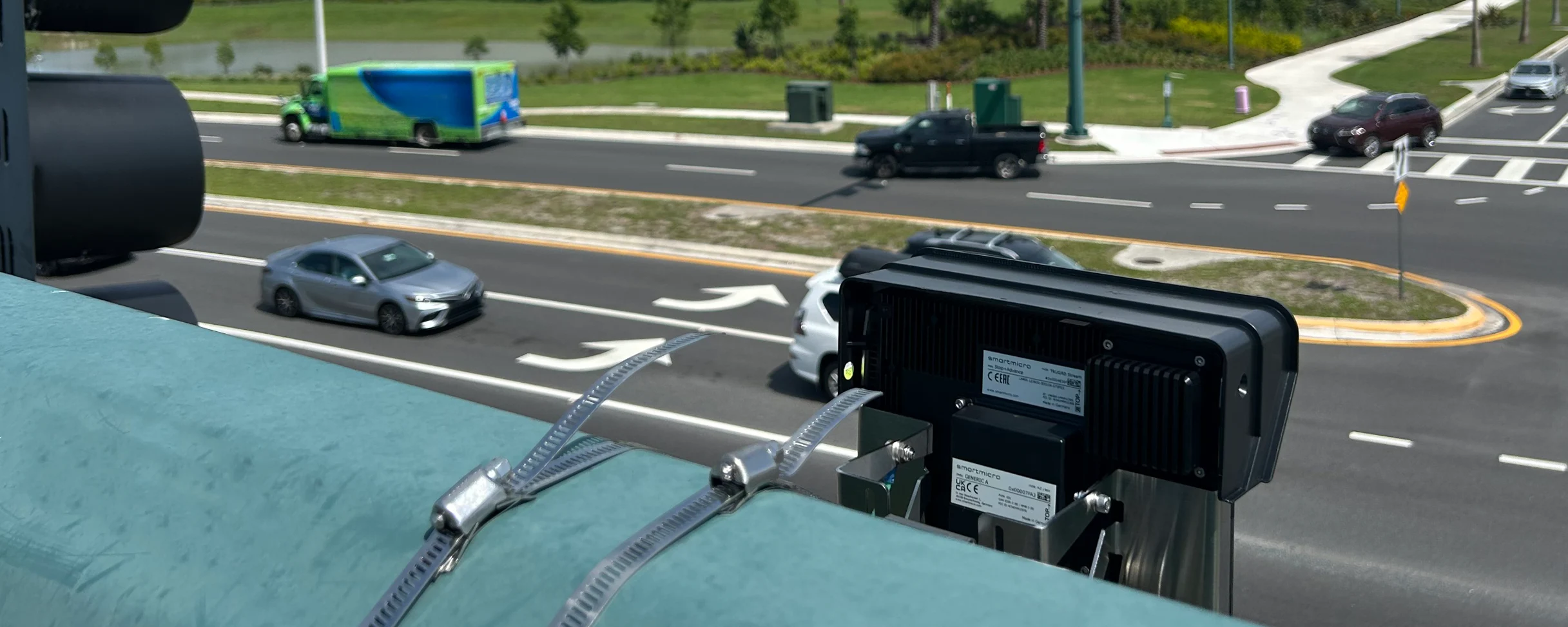
Blackpool Council installed 36 smartmicro TRUGRD Stream sensors at strategic locations across five important corridors:
- Route 1: Plymouth Road, part of the A587 connecting the north and south of Blackpool and providing access to the Promenade
- Route 2: East Park Drive, an important route to Blackpool Zoo, Stanley Park, and Blackpool Victoria Hospital
- Route 3: Preston New Road, a principal connection between the M55, the A587, the southern Promenade, and the town centre
- Route 4: Central Drive, providing access to major visitor attractions and car parks
- Route 5: The Promenade, serving Blackpool’s main tourism destinations and associated parking facilities
Together, these routes connect residential areas, major visitor destinations, the hospital, the town centre, and important regional connections such as the M55 and A587.
TRUGRD Stream combines high-performance radar detection with an integrated camera. The radar continuously captures structured traffic information, including road-user classification, traffic volume, occupancy, and speed. The integrated video stream provides additional visual insight into the monitored approaches and helps operators understand what is happening at individual locations.
The 36 sensors are connected through 16 COM HUB units. Traffic data is transferred from the roadside infrastructure to the smartmicro cloud environment and subsequently made available to SWARCO MyCity through a dedicated API.
This creates a continuous data chain from detection to traffic management:
- TRUGRD Stream detects and classifies traffic at the roadside.
- The COM HUB infrastructure collects and forwards the sensor data.
- The smartmicro cloud environment makes rolling traffic data available to SWARCO MyCity.
- MyCity Strategy Manager evaluates defined traffic thresholds.
- The most appropriate pre-configured UTC plan can be selected for the current conditions.
Simplifai AI supports the development of the data thresholds and corresponding control strategies. The result is an additional intelligent layer above the existing UTC environment, allowing Blackpool to respond more systematically to real-time demand without replacing its established signal control architecture.

Results and Benefits
The project gives Blackpool Council a much more detailed view of how traffic moves across five of the town’s most important corridors.
Instead of relying only on historic assumptions or isolated traffic counts, the Council can access continuously updated information about traffic volumes, speeds, occupancy, and the composition of road users. This provides the data required to identify changing demand and select a suitable signal plan.
The value of this detailed classification became particularly visible during a major cycling event in August 2025. On the Promenade, cyclists accounted for 81.2% of the detected transport mode split. The system was therefore able to quantify a significant and temporary change in road-user composition that would not have been represented by normal traffic patterns.
The project establishes several important capabilities:
- Continuous traffic monitoring across five strategic corridors
- Detailed classification of different road users
- Replacement of obsolete traffic-counting infrastructure
- Data-driven selection of existing UTC signal plans
- Greater visibility during seasonal peaks and major events
- A scalable data foundation for future mobility services
The Smart Traffic Corridors project was also recognised with the 2025 ITS UK Sustainable Environment through Technology Award. This recognition highlights the wider significance of Blackpool’s approach: using modern detection and system integration to make an existing traffic network more responsive, efficient, and future-ready.
Conclusion and Outlook

Watch the ExpertTalk
In this episode of the smartmicro ExpertTalk, Peter Eccleson, Managing Director of smartmicro UK, shares insights into the Blackpool deployment, the advantages of radar-based detection, and what other cities can learn from this award-winning mobility upgrade.
(Player not visible? Open the video via this link: click here)