From Incident Detection to Driver Warning in 14 Seconds
On high-speed road networks, the time between an incident occurring and approaching drivers receiving a warning can be critical. An effective response depends on detecting and classifying the initial hazard or incident and identifying its precise location. Delayed or insufficiently targeted information can increase the risk of secondary incidents and place road users, emergency responders and road maintenance teams in further danger.
Central Reserve Advanced Warning Lighting, or CRAWL, was developed to shorten this critical window from detection to response. The intelligent transport system combines incident detection, live visual information, control software and location-specific roadside warnings. Radar sensors from smartmicro provide accurate, real-time and location-specific traffic data for detecting traffic-related incidents. CRAWL then communicates warnings at the roadside, without relying on the connected or in-vehicle technology available in individual vehicles.
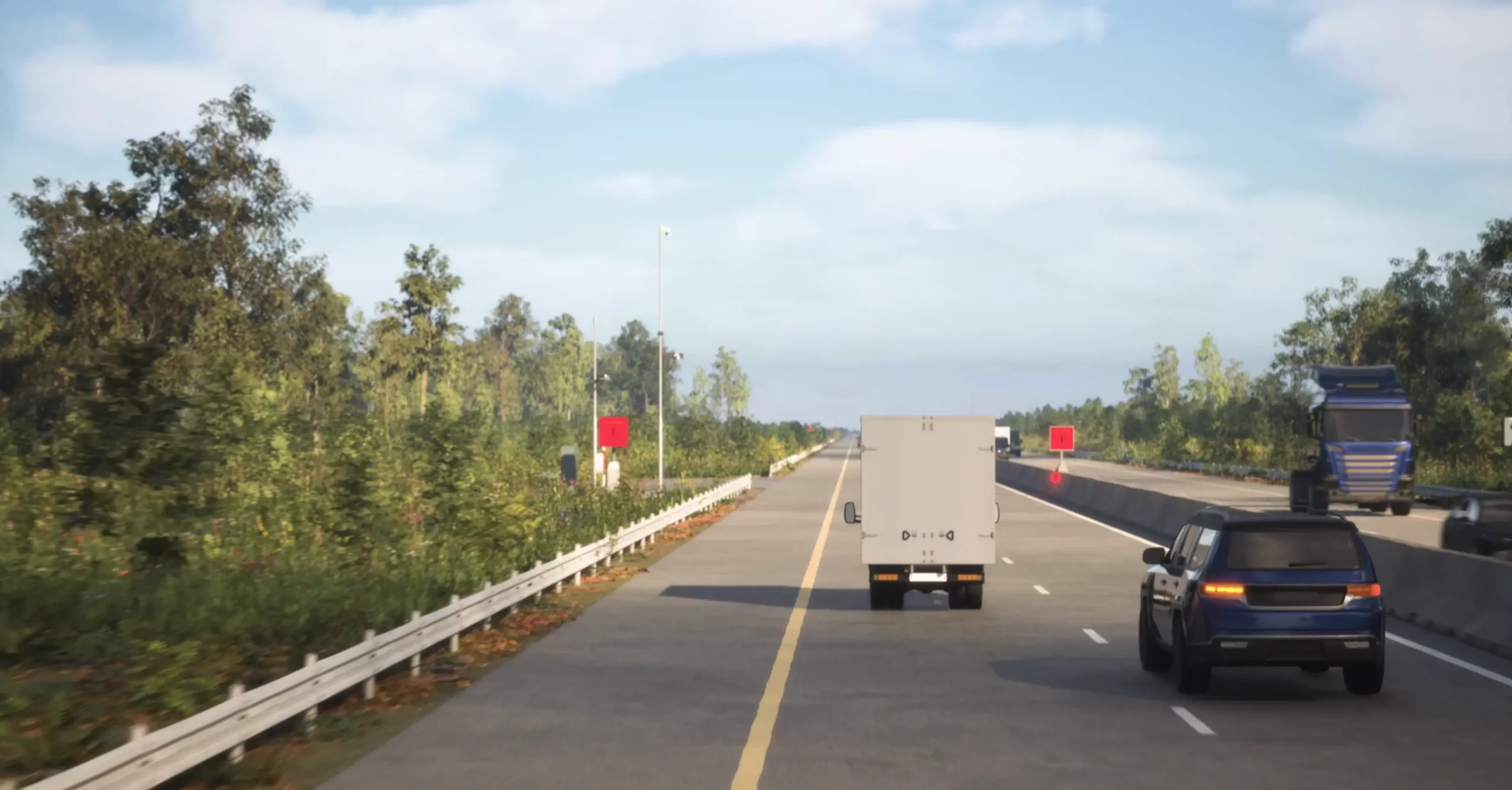
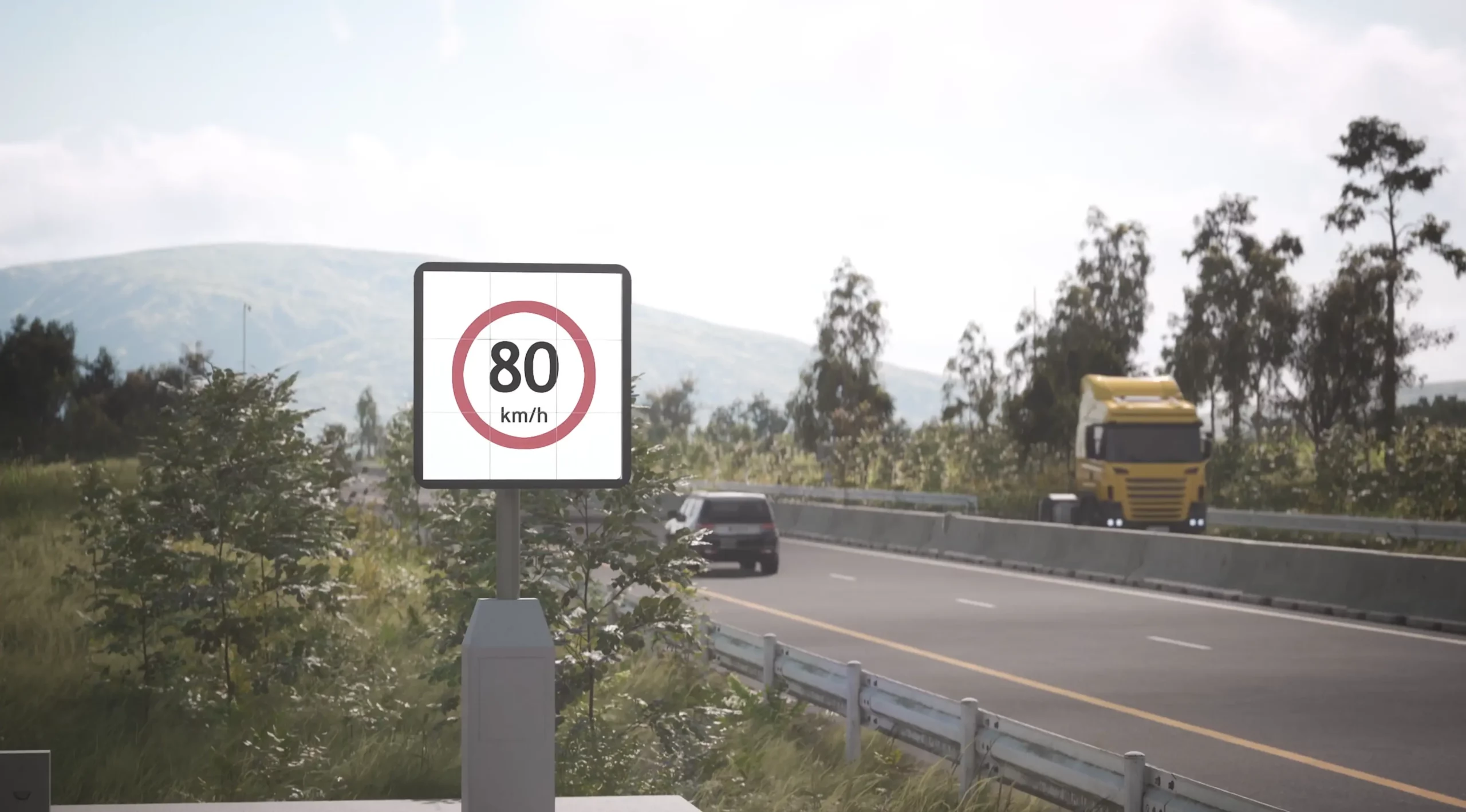
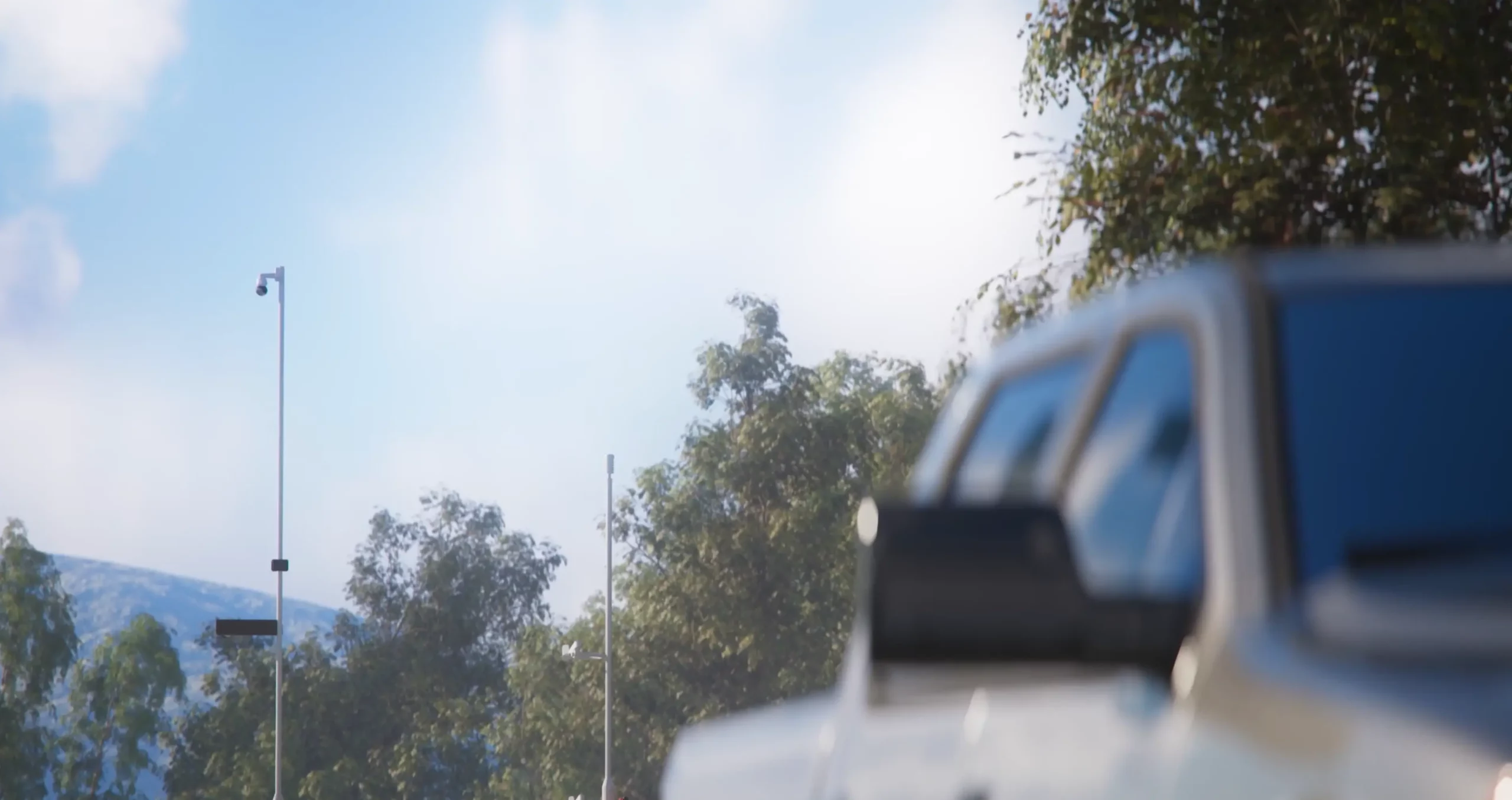
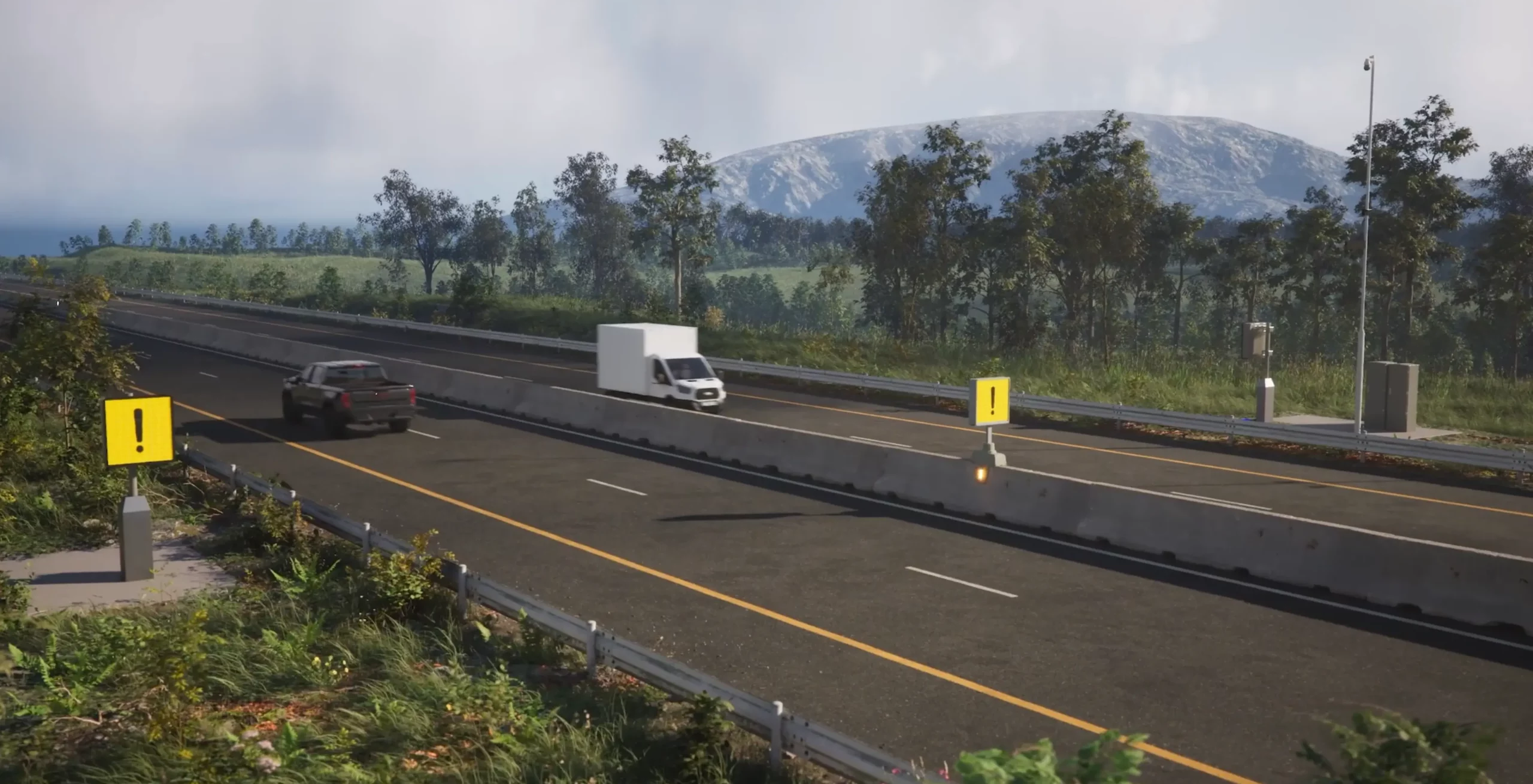
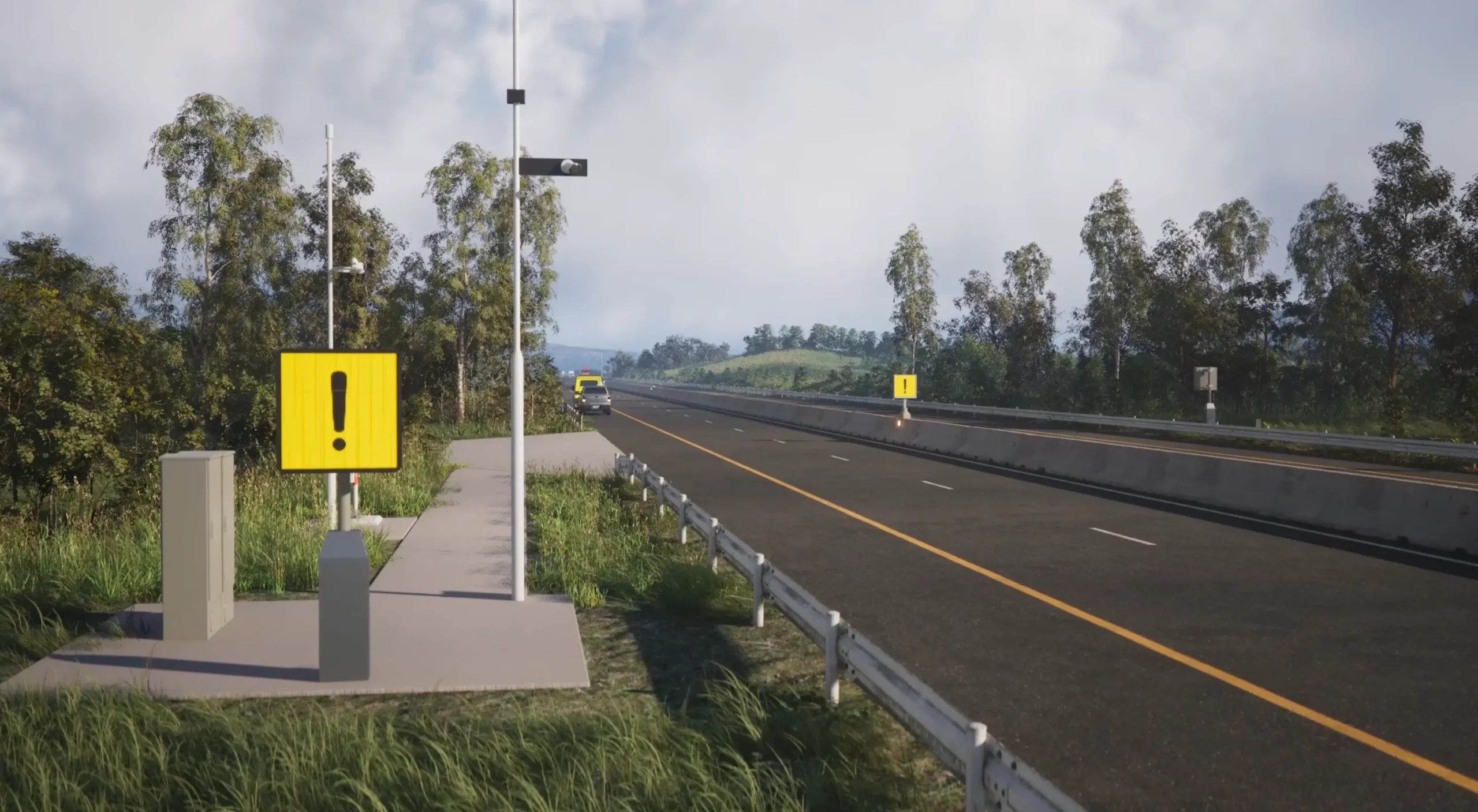
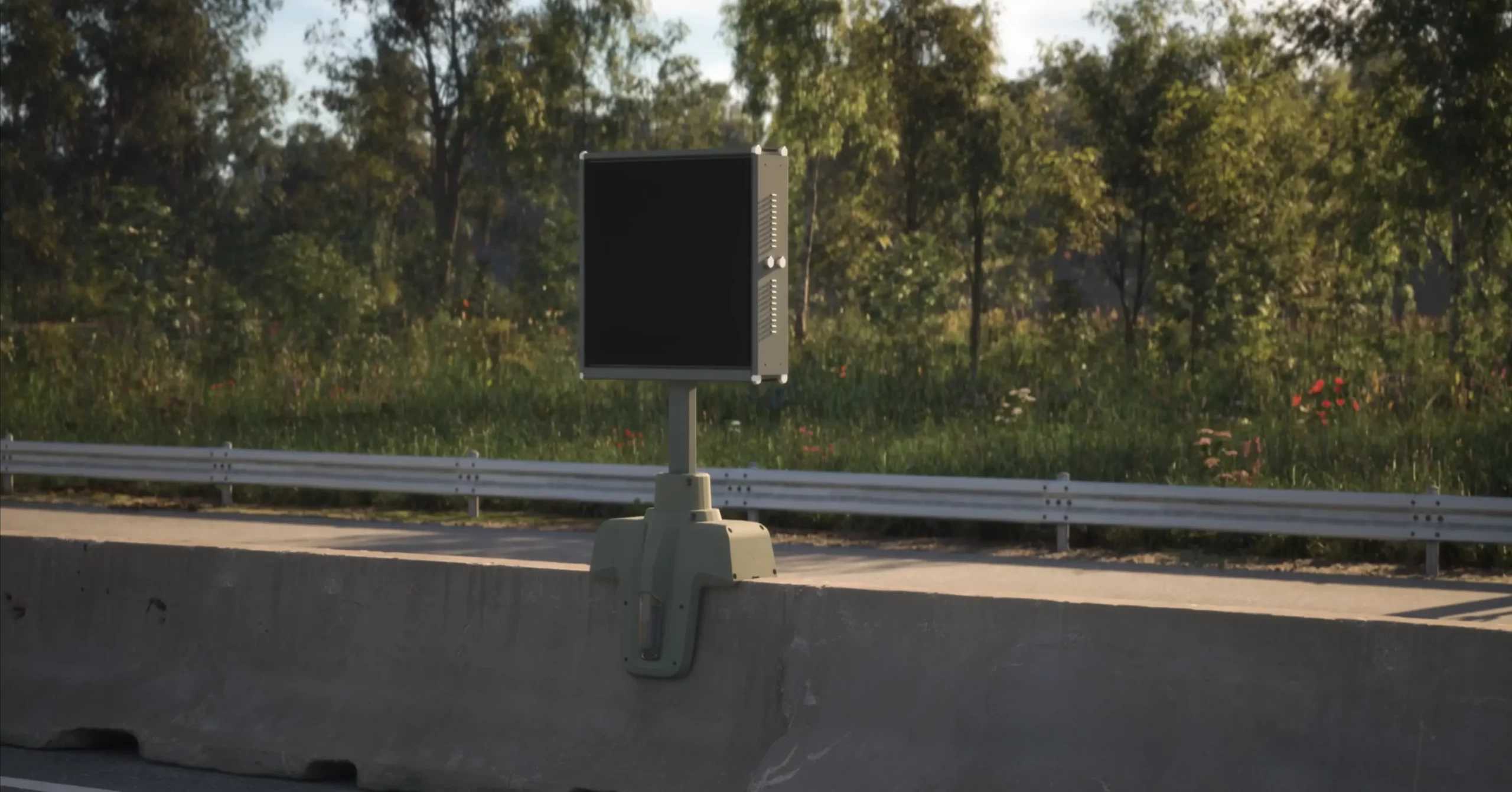
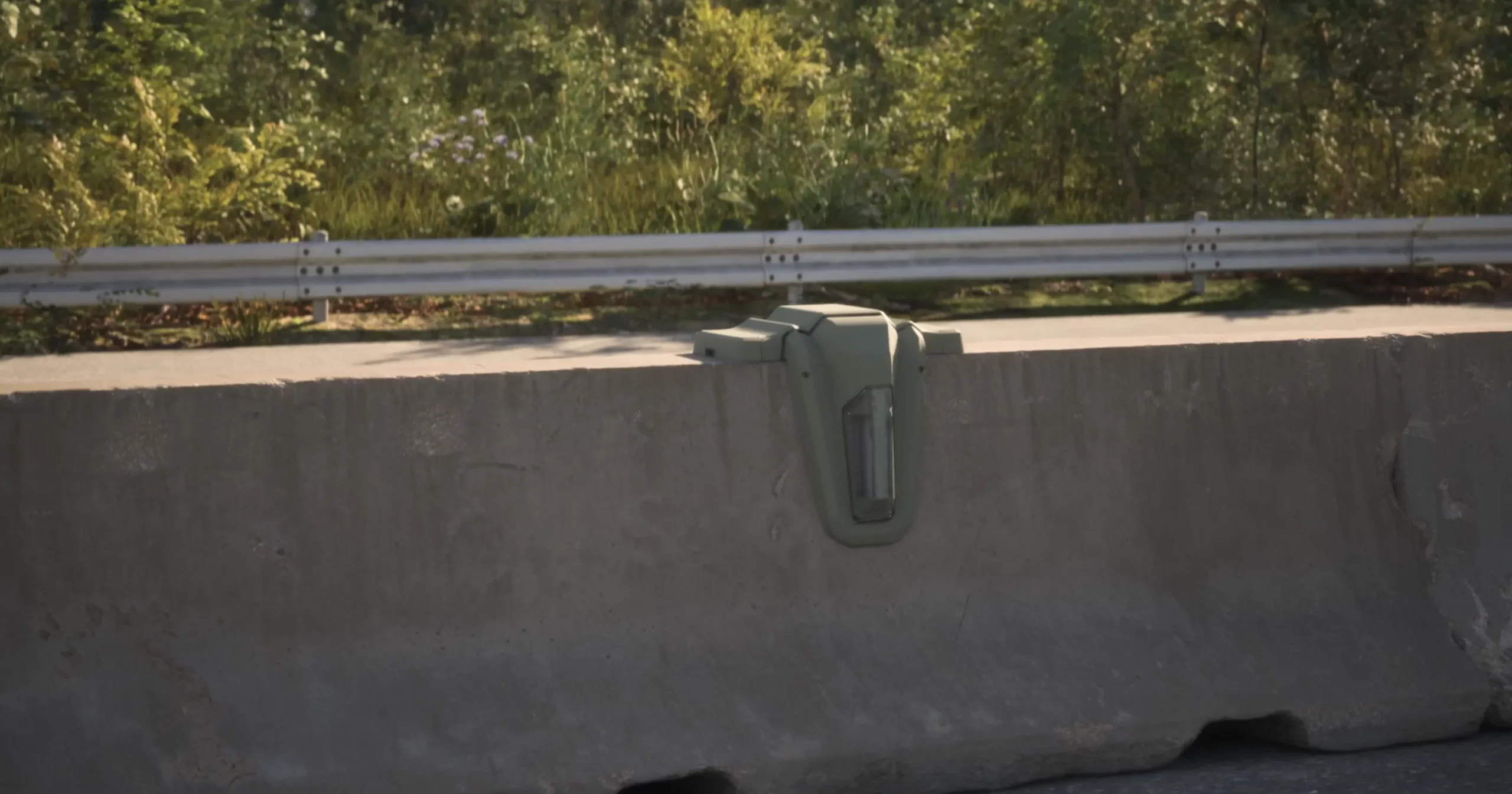
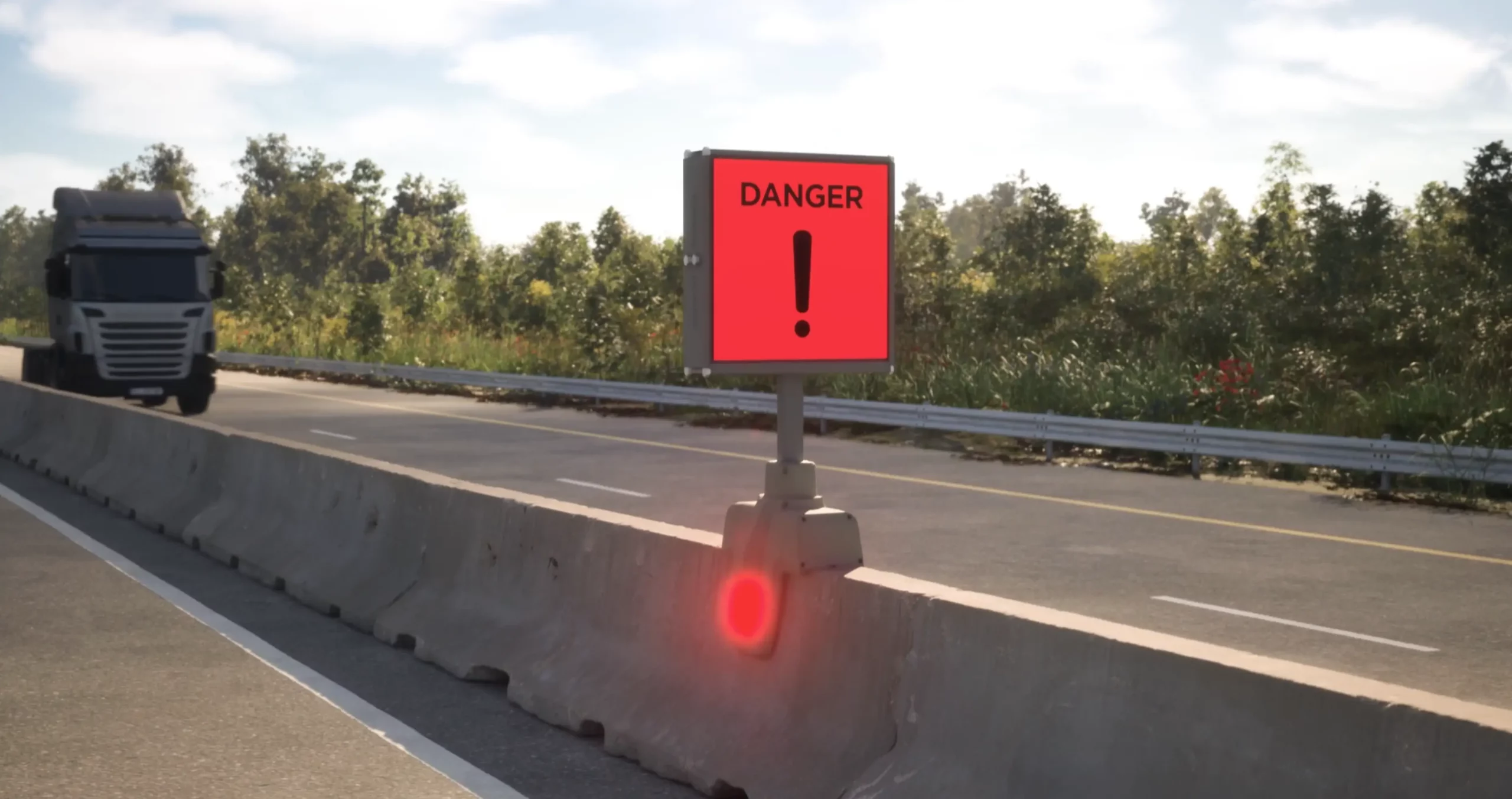
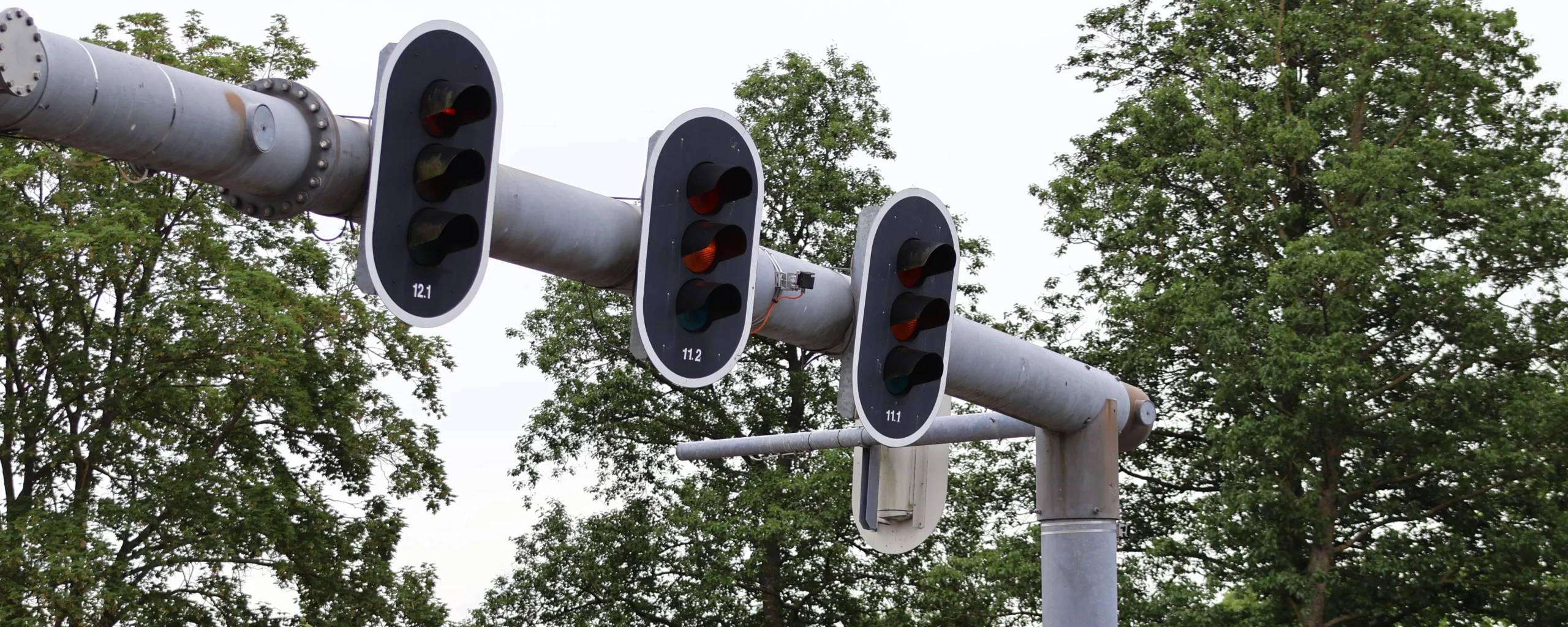
Concept visualisations from Lagan CRAWL . The scenes illustrate the CRAWL system and potential deployment scenarios and do not depict an operational installation. © Lagan CRAWL.
The Challenge
The concept for CRAWL emerged from years of practical experience gained by Lagan Operations and Maintenance while operating motorways and responding to incidents. This experience highlighted the need to improve both incident detection and the information subsequently provided to drivers and control room operators.
Conventional highway warning infrastructure can be limited by the accuracy and location of its detection systems. Fixed signs and gantries may also be positioned too far apart to provide warnings precisely where they are needed. As a result, information may reach drivers too late, lack sufficient detail or remain active beyond the affected area.
CRAWL was conceived in 2011 to provide a more responsive and location-specific approach. Its purpose is to identify hazards, confirm their location and communicate relevant information to approaching road users as quickly as possible.
The system is being developed to support a range of highway situations, including:
-
- Stopped or slow-moving vehicles
- Wrong-way drivers
- Collisions and other traffic incidents
- Pedestrians on the carriageway
- Planned roadworks
- Severe or localized weather conditions that could affect road-user safety
A central objective is to provide accurate and reliable detection that reduces the risk of secondary incidents by giving drivers relevant information early enough to slow down, change their behaviour and respond appropriately to the situation ahead.
The Solution
CRAWL brings together multiple detection, communication and warning components in an integrated highway safety system. Depending on the requirements of the road authority, it can operate at different levels of automation, from automated responses to operator-controlled traffic plans.
The system infrastructure includes radar sensors, PTZ cameras, weather and road-condition sensors, roadside control units, variable message signs and compact LED warning units installed along the central reservation. These components connect to a central monitoring and control platform through a secure communications network.
The roadside warning infrastructure can include:
-
- Roadside control units integrating smartmicro traffic-monitoring technology, weather-detection systems and communications equipment
- LED Saddle Units positioned at intervals along the central reservation
- Central-reservation variable message signs
- Larger variable message signs positioned on the verge
This distributed approach enables warnings to be activated close to an incident and along the relevant motorway section. Messages can be directional or bidirectional, depending on the situation and the traffic affected.
The Role of smartmicro Radar Technology
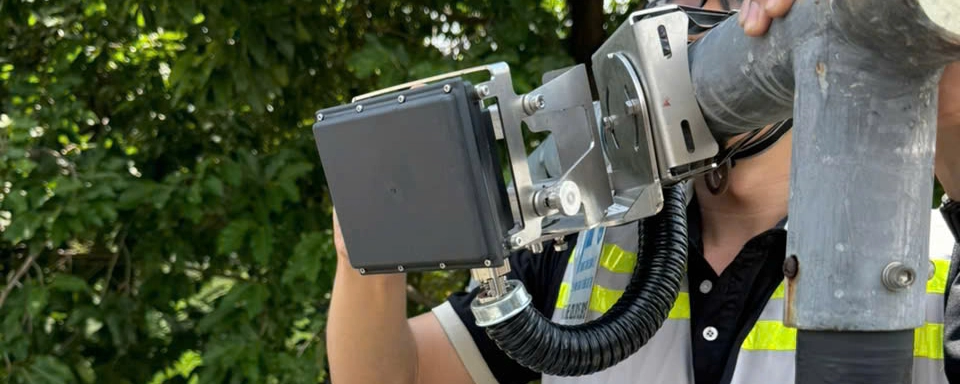
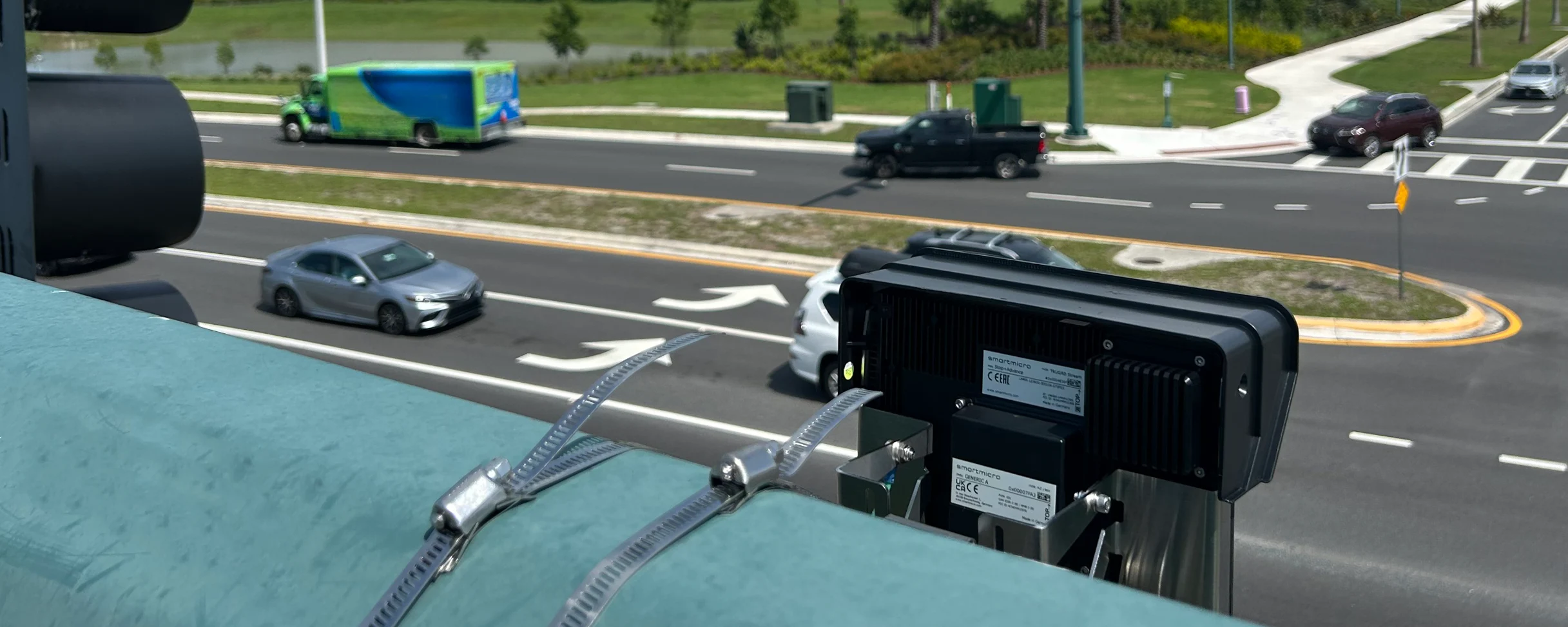
Within CRAWL, TRUGRD Stream radar sensors provide real-time traffic monitoring and traffic-related incident detection. They continuously observe traffic movement and provide data such as vehicle presence, position, speed and classification to the wider platform.
When the system identifies a relevant traffic event, radar data provides an initial input to the CRAWL control system and initiates a PTZ camera response. Control room operators receive an immediate live view of the affected location, helping them verify the incident, monitor its development and determine the appropriate response.
The current test environment evaluates two approaches to integrating smartmicro radar data.
In one configuration, CRAWL accesses target-by-target information through the smartmicro software development kit. In another, the COM HUB makes radar information available through an MQTT broker. This enables the wider system to use configurable trigger conditions based on factors such as object location, vehicle speed and classification.
These flexible interfaces allow radar data to be integrated into the wider CRAWL software architecture and used in automated or operator-managed incident workflows.
From Detection to Warning in 14 Seconds
During system testing, CRAWL demonstrated an end-to-end response sequence of 14 seconds:
0 seconds: Detection of the incident
4 seconds: Verification of the incident
10 seconds: Validation of the incident
14 seconds: Activation of the CRAWL LED Saddle Units and variable message signs
Once an incident has been detected and validated, the system can activate a predefined traffic plan and display relevant warnings to approaching drivers. At the same time, the control room receives incident details and access to live CCTV coverage.
Depending on the selected level of automation, operators can approve, adjust and manage the proposed response. They retain control of the camera system throughout the incident, allowing them to monitor developments and direct emergency services accordingly until normal motorway operations are restored.
The warning sequence can be adapted to the location, direction and type of incident. By limiting messages to the affected area and deactivating them once the hazard has passed, CRAWL aims to keep information relevant and reduce warning fatigue among drivers.
Results and Benefits
The clearest result from system testing so far is the demonstrated 14-second sequence from initial incident detection to the activation of roadside warnings.
This rapid connection between detection, validation and communication illustrates one of the system’s central benefits: traffic information can move from the road, through the control platform and back to approaching road users within seconds.
The technologies used to detect a hazard or incident convert that detection into actionable information within the same sequence. Roadside warnings do not depend on connected or in-vehicle technology. At the same time, control room operators receive an automated incident alert, live CCTV coverage of the location, confirmation of the warnings activated and a proposed traffic plan for approval, together with full camera control for the duration of the incident.
The integrated approach is designed to provide several additional benefits:
-
- Earlier and more location-specific warnings for approaching drivers
- Improved situational awareness for control room operators
- Live visual monitoring throughout the lifecycle of an incident
- Faster coordination of traffic plans and incident responses
- Reduced exposure of road workers when deploying temporary warnings
- Greater protection for road users, emergency responders and maintenance teams
- A modular infrastructure that can support additional applications and future technologies
- Scalable coverage across longer sections of the motorway network
By bringing detection data, live CCTV information and predefined traffic plans together within one platform, CRAWL can also support a more efficient operator workflow. Rather than relying on separate sources of information, control room teams can receive an incident alert, view the affected location and coordinate the appropriate response through a connected system.
More accurate information about the nature and location of an incident can also support coordination with emergency services. It can help control rooms direct response teams along the most appropriate route to the incident while warning approaching traffic before emergency personnel arrive.
CRAWL can additionally support traffic-management measures such as variable speed limits, journey-time monitoring and average-speed detection. Its modular infrastructure provides a potential foundation for additional roadside systems and future V2X applications.
The Next Phase: A 10 km Open-Road Trial
Following the current development and system-testing phases, CRAWL is preparing for a larger open-road trial on the M18 in County Galway.
The trial is expected to cover approximately ten kilometers, with installation scheduled to begin in late 2026 or early 2027. It will combine radar, CCTV, roadside warning units, variable message signs, weather monitoring and the CRAWL monitoring and control platform.
Testing under real-world motorway conditions will provide operational data, road-user observations and feedback for further development. The trial will focus on workflows for:
-
- Incident management
- Scheduled roadworks
- Severe weather events
It will also help assess system performance, reliability, communications coverage and the appropriate level of automation across a longer motorway section.
Conclusion
CRAWL demonstrates how accurate detection can be connected directly with visual verification, control room coordination and location-specific warnings for road users.
Radar technology from smartmicro provides an important source of real-time traffic information within this wider system. Flexible SDK and COM HUB integration options allow radar data to be incorporated into the CRAWL platform and used to support configurable incident-detection and response workflows.
The demonstrated 14-second response sequence provides a solid foundation for the next development phase. The planned open-road trial will generate the real-world evidence needed to refine the system and further evaluate its contribution to safer, faster and more targeted motorway incident response.
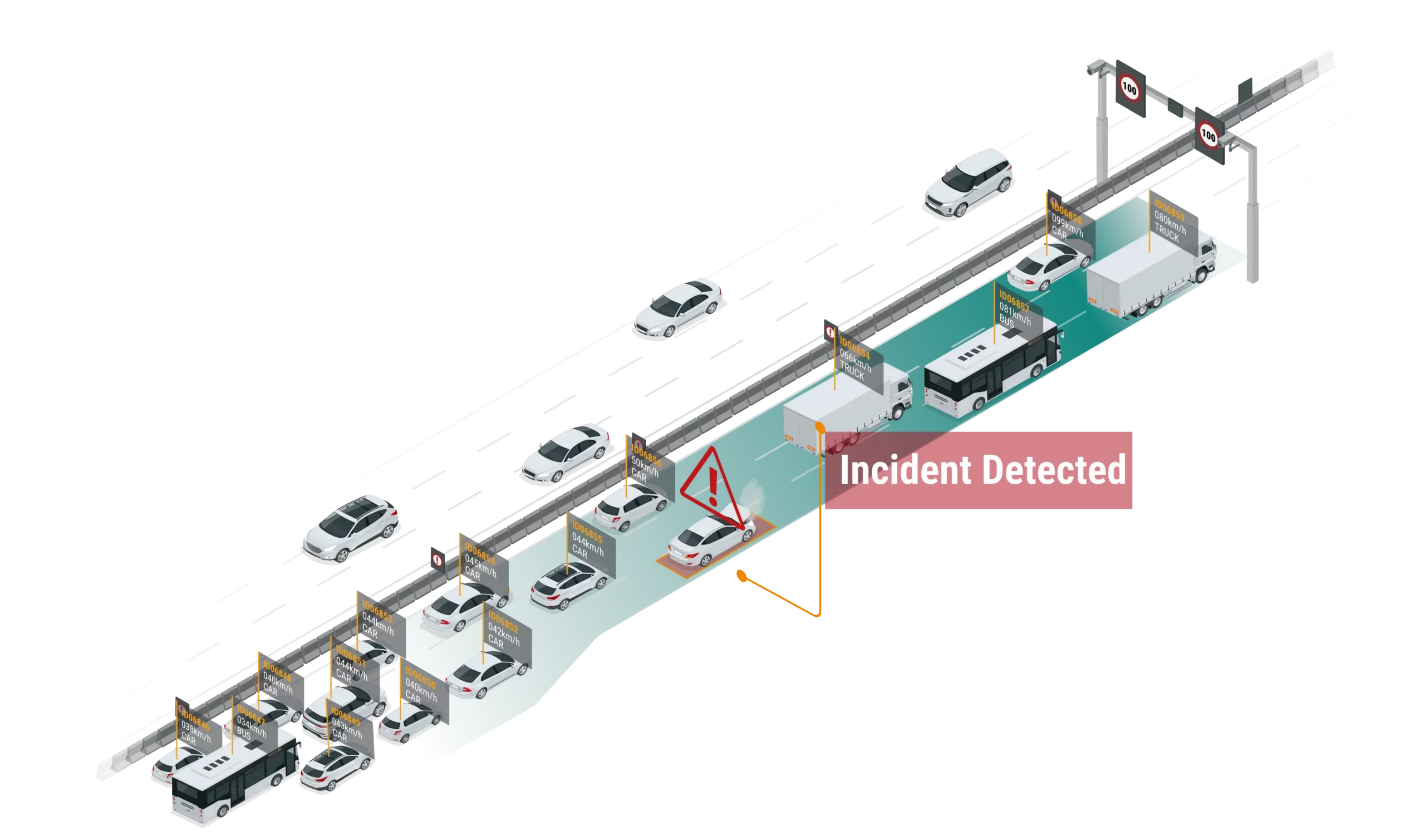
Illustration of radar-based vehicle tracking and incident detection within the Lagan CRAWL system. © smartmicro
Want to explore the wider highway perspective?
Watch our on-demand Webinar: Beyond Highway Monitoring: From Vehicle Detection to Real-Time Traffic Awareness to learn how continuous radar tracking supports earlier incident awareness and more responsive traffic management.